
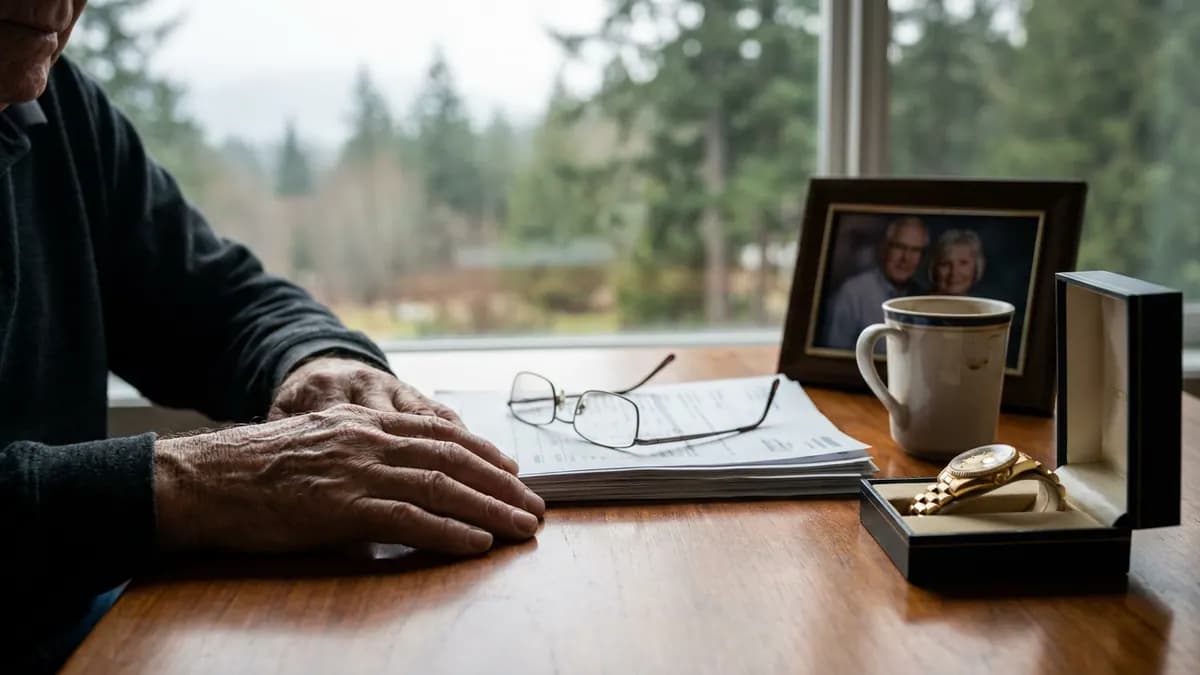
Introduction to Retirement and Spousal Support
Retiring in Vancouver is a milestone many look forward to, but for those paying or receiving spousal support, it brings complex legal questions. Under British Columbia law, retirement is not an automatic end to spousal support obligations. Instead, it requires a careful legal analysis of your changing financial circumstances, pension division, and the initial terms of your separation agreement or court order.
Is Retirement a Material Change in Circumstances?
In British Columbia, to change a spousal support order under either the federal Divorce Act or the provincial Family Law Act, you must prove a material change in circumstances. Retirement often qualifies as a material change because it typically results in a significant reduction in income. However, the courts will closely examine the nature and timing of your retirement.
If you retire at the standard age of 65, courts generally accept this as a legitimate material change. Conversely, if you choose to retire early, the court may scrutinize your decision. If a judge determines that an early retirement is voluntary and not medically or economically necessary, they might impute income to you. This means you would still be expected to pay support based on your pre-retirement earning capacity, regardless of your actual reduced pension income.
The Impact of Pension Division and Double Dipping
One of the most complex areas of retirement and spousal support in BC involves the treatment of pensions. During a separation, a pension accumulated during the marriage is typically classified as family property and divided between spouses.
When you retire, that pension converts into an income stream. A common legal issue that arises is known as double dipping. The Supreme Court of Canada addressed this in the landmark case of Boston v. Boston. The general rule is that it is unfair to allow the recipient spouse to receive a share of the pension as property during the divorce, and then later use the payor's share of that same pension as income to calculate ongoing spousal support.
While courts try to avoid double dipping, exceptions do exist. If the recipient spouse has exhausted their share of the family assets to meet basic needs due to circumstances beyond their control, a judge might still consider the payor's pension income for spousal support purposes.
Age and the Duration of Spousal Support
Age plays a significant role in determining how long spousal support should last, even before retirement occurs. In Canada, the Spousal Support Advisory Guidelines provide a framework for calculating both the duration and amount of support.
A critical concept within these guidelines is the rule of 65. If the recipient's age at the time of separation plus the total years of marriage or cohabitation equals or exceeds 65, spousal support is generally considered indefinite in duration. Indefinite does not necessarily mean permanent or unchangeable. It simply means there is no predetermined end date. When the payor reaches retirement age, an indefinite support order can still be reviewed and potentially reduced or terminated based on the new financial reality of both parties.
Practical Steps for Modifying Support Upon Retirement
If you are approaching retirement and wish to modify your spousal support obligations, proactive planning is essential. You cannot simply stop making payments once you leave the workforce. Unilaterally stopping payments will result in mounting arrears, which the Family Maintenance Enforcement Program can aggressively collect through wage garnishment, driver license suspension, or property liens.
First, review your existing separation agreement or court order. Many well-drafted family law agreements in British Columbia include specific clauses outlining exactly what will happen when the payor retires.
Second, initiate discussions with your former spouse well in advance of your retirement date. If you can reach a mutual agreement on a reduced support amount or a lump-sum buyout, you can file a consent order with the court to make the new arrangement legally binding. It is also worth noting that Canada Pension Plan credits accumulated during the relationship can be split, which may alter the recipient's income and reduce their need for ongoing support.
If an agreement is not possible, you will need to file an application in either the BC Provincial Court or the BC Supreme Court, depending on where your original order was made. You must provide full financial disclosure, including your expected pension income, government benefits like CPP and Old Age Security, and any other retirement savings.
Seeking Professional Legal Guidance
Navigating the intersection of family law and retirement planning requires specialized knowledge. Because the rules surrounding imputed income, pension division, and the Spousal Support Advisory Guidelines are highly nuanced, consulting with a Vancouver family lawyer is highly recommended. A legal professional can help you assess whether your retirement qualifies as a material change, calculate potential new support ranges, and negotiate effectively with your former spouse to ensure your retirement years are financially secure.