Overview
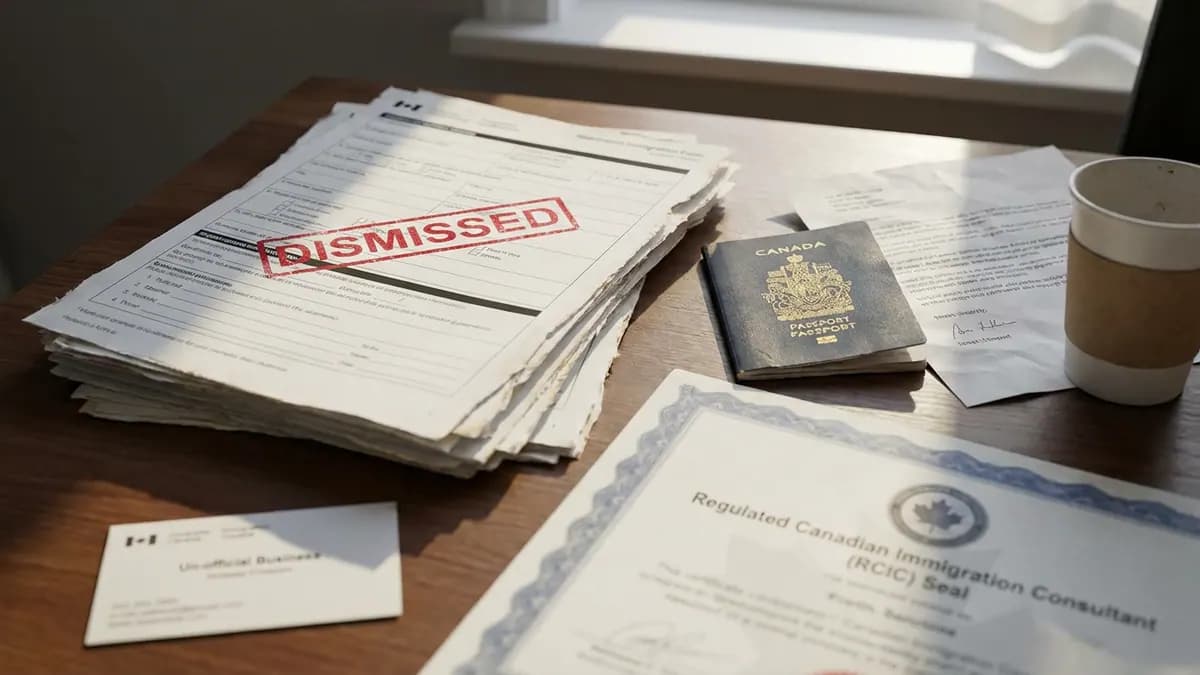
A recent mass filing by the Canadian federal government highlights a severe crackdown on the use of unauthorized immigration representatives, often referred to as "ghost consultants." In a significant legal maneuver, Ottawa has asked the Federal Court to dismiss 430 immigration applications collectively. This case serves as a stark warning to applicants in British Columbia and across Canada: attempting to navigate the immigration system using unlicensed help can lead to catastrophic legal consequences, regardless of the merits of your case.
The Case Against the 430 Applicants
According to court filings reported by the Toronto Star, the Minister of Immigration has filed a motion to throw out 430 separate applications for judicial review. These cases involve Chinese applicants who had applied for study, work, or visitor permits and were seeking mandamus orders—court orders compelling the government to issue a decision on their files due to unreasonable processing delays.
The government's motion argues that these cases should be dismissed not because of the immigration merits, but due to procedural fraud. Despite the applicants claiming to represent themselves, the government identified suspicious similarities across the filings. Evidence presented suggests that the applications shared identical formatting, style, and phrasing. More damningly, the applicants shared the same home addresses, phone numbers, and email accounts in their court filings, despite being distinct individuals.
The Department of Justice contends that these irregularities prove the involvement of an unauthorized person or group acting behind the scenes. By claiming self-representation while actually employing a ghost agent, the government argues the applicants were untruthful to the court.
The Legal Concept of "Ghost Agents"
Under Canadian law, specifically regarding the Federal Court, an applicant may only be represented by a licensed lawyer or an authorized individual (such as a regulated consultant), or they may represent themselves. A "ghost agent" or "ghost consultant" is an unlicensed individual who prepares applications or court filings for a fee but refuses to sign the documents or declare their involvement. They operate in the shadows to avoid regulatory oversight.
In the current motion, the government asserts that the use of these agents undermines the integrity of the justice system. As noted in the case documents, the court has a duty to ensure compliance with its rules and verify that those appearing before it are authorized officers of the court. When an applicant lies about who prepared their documents, they are committing a form of fraud upon the court.
Precedents and Consequences
This is not the first time the Federal Court has taken a hard line against this practice. The document references a similar situation from the previous year involving 31 Cameroonian applicants. In that instance, the court consolidated and quashed the proceedings because the filings contained identical passages citing non-existent case law. Those applicants were not only denied their day in court but were also ordered to pay $720 each in costs to the government.
The implications for the current 430 applicants are severe. Immigration lawyer Max Berger noted that some of these applicants likely had valid legal arguments regarding their delays. For example, one applicant had been waiting 498 days for a visitor visa, a delay that might typically warrant a mandamus order. However, because the application is tainted by the dishonesty regarding representation, the court is entitled to dismiss it entirely. The fraud renders the legitimacy of the delay irrelevant.
Implications for British Columbia and Canadian Law
For residents of British Columbia and prospective immigrants, this case reinforces the principle that "clean hands" are required when seeking equitable relief like mandamus. You cannot ask the court to force the government to follow the rules if you have broken the rules to get to court.
Furthermore, the government is ramping up enforcement. Proposed regulations expected in 2026 aim to impose monetary penalties of up to $1.5 million against unauthorized practitioners. However, as immigration lawyer Jing Yang pointed out, it is often the applicants who pay the immediate price. When ghost agents jam the system with poor-quality, boilerplate applications, they contribute to the very backlogs that cause delays for legitimate applicants.
Practical Advice: Protecting Your Application
To avoid the fate of these 430 applicants, it is vital to ensure your representative is authorized. If you are hiring someone to assist with your immigration or court matters, they must be:
A lawyer or paralegal in good standing with a provincial law society (such as the Law Society of British Columbia). A consultant in good standing with the College of Immigration and Citizenship Consultants (CICC).
If a representative asks you to sign an application claiming you prepared it yourself, or if they refuse to provide their license number, walk away immediately. The risk is not just a rejected application; it is being barred from Canada for misrepresentation or having your court case summarily dismissed.
As the government's motion stated, dismissing these cases promotes the "just, most expeditious and most economical resolution." The courts will not tolerate the abuse of the legal system by unauthorized agents, and ignorance of the law will not save an applicant from the consequences of such deception.